How to Price a Paint Job Without Guessing
You ever stood in an empty living room, tape measure in hand, and had no clue what number to say out loud? Yeah. That silence is brutal. Figuring out how to price a paint job is the one thing nobody actually teaches you. You learn to cut a clean line and load a roller. Pricing, though? You guess, then you hope. And guessing is exactly how good painters go broke.
Here is the good news. Pricing is math, not magic. Once you know the three numbers hiding behind every quote, how to price a paint job stops being a knot in your stomach and turns into something you can repeat all day. Let’s get into it.
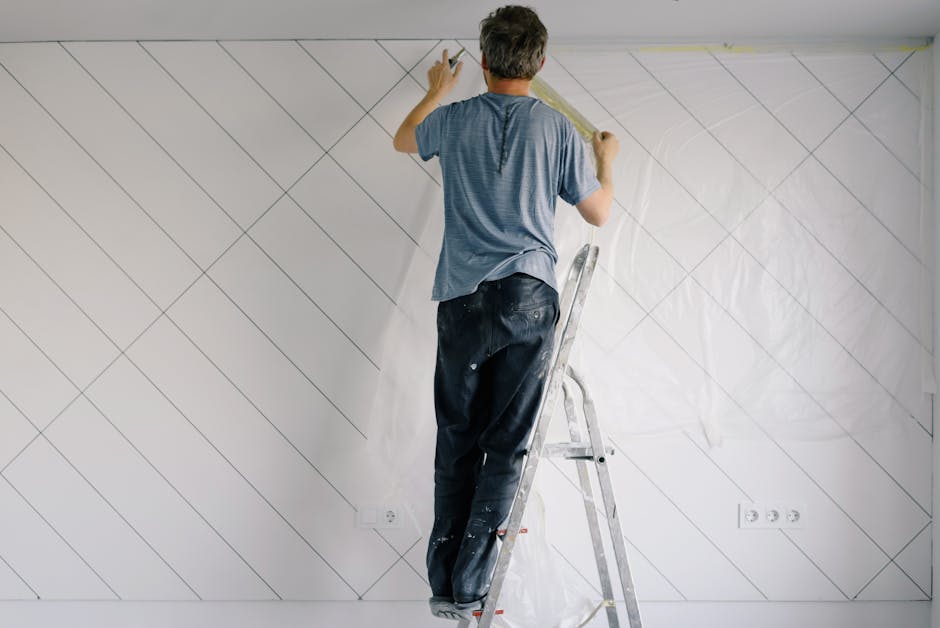
Start with the surface, not the room
Rooms lie to you. A big room with two doors and a wall of windows has less paintable surface than a cramped one with tall ceilings and fat trim. So measure the surface. Not the floor.
Add up the wall length, multiply by ceiling height. Then decide what is actually getting painted: walls only, or walls plus trim and ceilings. That one choice swings your number hard. Nationally, walls-only work runs roughly $1.30 to $2.78 per square foot, while walls, trim, and ceilings together climb closer to $4.70 per square foot once you count all the extra cutting and coats.
And don’t forget prep. This is where I see people bleed money. Sanding and patching a beat-up wall adds about $0.50 to $0.75 per square foot, and textured walls can drink up to 50% more paint than smooth ones. Walk the space, note every ding, and price the prep on purpose. Absorb it later and it comes straight out of your pocket.
While you are here, how do your reviews compare?
Type your business name and see where you rank against your competitors. Free, no signup.
Trophy Jar asks every customer for a review automatically, from $9 a month.Start now
The three numbers behind every quote
Every honest estimate is built from three things. Materials, labor, and overhead plus profit. Nail those and how to price a paint job becomes a formula you can run in the truck before you back out of the driveway.
Materials are the cheap part. A gallon of decent interior paint runs $20 to $50 and covers around 300 to 400 square feet a coat, so divide your surface by 350, then double it for a second coat. Toss in rollers, tape, and drop cloths, call it $30 to $50 for a normal room. Most pros mark materials up 20% to 35% to cover store runs, waste, and the color consult nobody pays you for directly.
Overhead is the quiet killer. Insurance, the truck, gas, your phone, the software you run, all of it. It has to be baked into the number. Skip it and you are working for free while calling it a business.
How to price a paint job by the square foot
The fastest way to quote is a square-foot rate, because it folds everything into one number you already trust. Interior painting generally lands somewhere between $2 and $6 per square foot including paint and materials, with most residential jobs sitting right in the middle.
So a 1,200 square foot job at $3.50 comes out around $4,200. Easy. The trap is treating that rate like it’s carved in stone. Tall ceilings that need a ladder or scaffold. Dark-to-light color changes that demand a third coat. Heavy trim. A customer who suddenly wants the closets done too. All of it earns a higher rate. When you learn how to price a paint job this way, the square-foot number is your floor, not your ceiling.
Keep a little cheat sheet of your own rates. Smooth walls, textured walls, trim, ceilings. After ten jobs you’ll quote in minutes and be right almost every time.
Labor is where the money actually goes
Here is the stat that stops new painters cold: labor is 75% to 85% of the total on most jobs. Paint is cheap. Your time is not, and it never was.
Painter labor typically runs $25 to $50 an hour, hovering around $35, and it climbs fast in pricey metros where the going rate can hit double that. But the hourly number alone won’t price anything. You need production speed. A skilled painter covers roughly 150 to 350 square feet an hour depending on the surface, the sheen, and whether they spray or roll.
So do the math both ways. Estimate the hours, multiply by your true labor cost (wage plus taxes, workers’ comp, all of it), then check that against your square-foot number. When the two agree, quote it and don’t blink. That cross-check is the core of how to price a paint job that actually pays you instead of just keeping you busy.
Markup, margin, and the guts to charge
Once you’ve got your direct costs (materials plus labor), you add markup. Most painting contractors run 25% to 50% on top, and the lazy-genius shortcut is to multiply direct costs by 1.4 to 1.5. So $2,000 in real costs becomes a $2,800 to $3,000 bid. Aim for a net profit margin of 15% to 25% once everything is paid.
The rookie mistake, and almost everyone makes it, is underbidding to win the job. You win it. Then you resent it. Then you rush it. Then you get a two-star review out of a job you should’ve been proud of. Charging enough to do great work isn’t greedy. It’s how you stay in business long enough to actually get good.
Fuzzy on markup versus margin? Quick version. A 43% markup equals a 30% margin. Markup is what you tack on top of cost. Margin is the slice of the final price that’s profit. Track margin, always, because that’s the money you keep.
And if you work alongside other trades, the same logic runs straight through how contractors price and win work. Know your costs cold, then charge for the value, not just the hours on the clock.
The bottom line on how to price a paint job
If there is one thing to take away about how to price a paint job, it is that consistency wins. The businesses that get the most out of how to price a paint job are the ones that make it a steady habit rather than a one-off push, and let the results build on their own.
Reviews increasingly shape which businesses buyers and search engines trust. For context, see Google’s guidelines on reviews.
Every quote you win should turn into more inbound work
Learning how to price a paint job right is only half the fight. The other half is making sure every finished job hands you the next three. That’s the flywheel. More happy customers leave more reviews, more reviews push you higher in local search and put you in front of people asking Google, Bing, or ChatGPT who to hire, and that means more inbound calls without burning a dollar on ads.
Trouble is, painters are terrible at asking for reviews. You’re up a ladder, not chasing texts. So the ask never goes out, and your best work stays invisible. The fix is to take yourself out of it entirely.
That’s the whole point of Trophy Jar. When a job wraps or an invoice gets paid, it auto-sends the review request for you, nudges the people who forget, and pushes your five-star work to Google and the directories where new customers are already looking. You price the job. Trophy Jar turns it into the next one.
Frequently Asked Questions
What is the average cost to price a paint job per square foot?
Interior painting usually runs $2 to $6 per square foot including paint and materials. Walls-only work lands around $1.30 to $2.78 per square foot, while walls, trim, and ceilings together climb closer to $4.70. Prep like sanding and patching adds roughly $0.50 to $0.75 per square foot on top of that.
How much of a paint job is labor versus materials?
Labor is the big number, usually 75% to 85% of the total. Paint and supplies are relatively cheap. Painter labor runs about $25 to $50 an hour (hovering near $35), and a skilled painter covers roughly 150 to 350 square feet per hour depending on the surface and whether they spray or roll.
What markup should I add to a painting quote?
Most painting contractors add 25% to 50% markup on top of direct costs, or just multiply materials plus labor by 1.4 to 1.5. The goal is a net profit margin of 15% to 25% after labor, materials, and overhead are all covered. Underbidding to win jobs is the quickest way to work yourself out of business.
Related reading
Keep going: see get more reviews on autopilot.
Turn every paint job into your next three
You nailed the quote and did great work. Now let Trophy Jar auto-send the review request the moment the job wraps, so your five-star painting shows up where new customers are searching. Start for $9/month.