How to Start a Carpet Cleaning Business (Without the Guesswork)
How to start a carpet cleaning business sounds like a big, complicated question. It isn’t. Most guides make it feel like you need a truck-mounted rig and a fat bank balance, and that’s just not true. You can launch for a few thousand dollars, run the whole thing out of your own vehicle, and be booking paid work inside a month. The margins are healthy. The overhead is low. And here’s the part that hooks people: your customers need you again every year or two, like clockwork. Here’s what it actually takes.

How to start a carpet cleaning business on a small budget
Most people who look up how to start a carpet cleaning business assume the answer starts at $50,000 and a truck-mounted rig. Nope. A solid portable extractor runs $1,500 to $4,000, and plenty of owners get their whole operation off the ground for $5,000 to $10,000 all in. That figure covers the machine, your first round of supplies, and enough marketing to make the phone ring.
The pricey end is real, sure. Truck-mounted systems can push startup costs past $75,000 once you factor in the vehicle. But you can rent or borrow the specialty gear until the jobs actually justify owning it. Start lean. Buy the tools you’ll touch on every single job, and skip everything else until the demand shows up on its own.
So when you map out how to start a carpet cleaning business, begin with the smallest kit that still lets you do genuinely good work. Then feed your early profit back into better equipment. No debt, no pressure, and the business ends up paying for its own growth.
While you are here, how do your reviews compare?
Type your business name and see where you rank against your competitors. Free, no signup.
Trophy Jar asks every customer for a review automatically, from $9 a month.Start now
The gear that actually matters
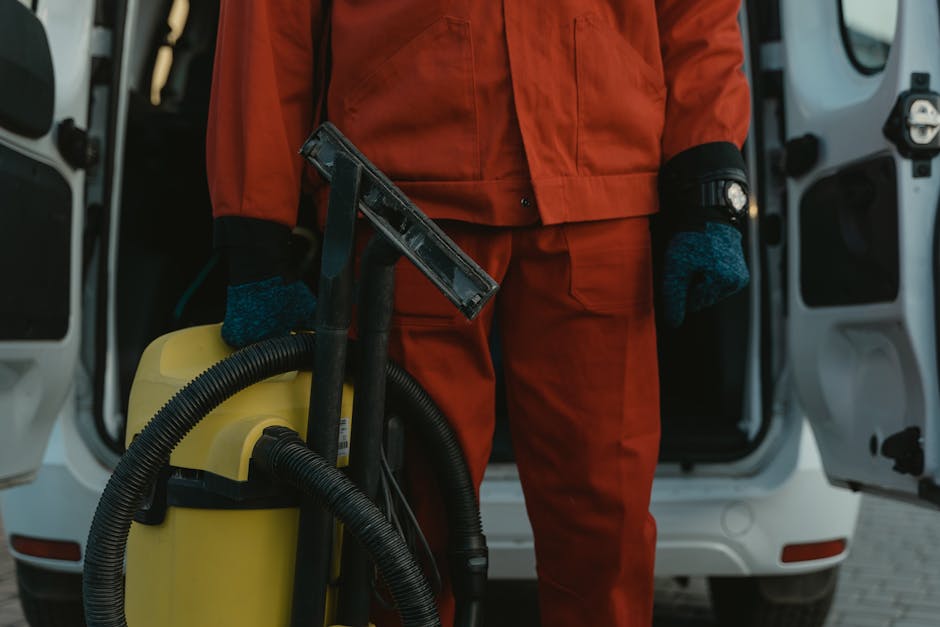
When you’re working out how to start a carpet cleaning business, the equipment list is where people blow their budget. So here’s the short version, the gear that earns its keep. A professional portable extractor ($1,500 to $4,000) is your engine. Add a good commercial vacuum ($200 to $500), a wand and hoses, a sprayer, and a couple of drying fans. Keep cleaning solutions and spot treatments stocked ($200 to $500). That’s a working kit that handles almost any residential job you’ll get called for.
You’ll also need something to haul it in. A used van in the $10,000 to $30,000 range is the standard move, though honestly your own car works fine for the first few jobs if your machine is portable. And don’t skip the boring part: a basic business license usually runs $50 to $400 depending on your city and state. Sort that out before your first paid job, not after. Trust me on that one.
Pricing: how a carpet cleaning business makes money
Most residential carpet cleaners charge $50 to $75 per room, sometimes dipping to $40 or climbing past $90 for bigger spaces. Add it up and the average job lands somewhere around $180 to $250. Book a few of those a day and the math gets fun in a hurry. A full-time solo operator can gross $75,000 to $200,000 a year, depending on your area and how many jobs you knock out each week.
The margins are what pull people in. A well-run carpet cleaning business tends to see net profit in the 20% to 40% range, and the leanest solo operators push higher once they get their supply and fuel costs under control. But here’s the thing nobody mentions when you research how to start a carpet cleaning business: the recurring nature of the work is the real prize. You’re not chasing one sale. You’re building a list that rebooks itself.
That’s what makes learning how to start a carpet cleaning business worth the effort. A one-time job pays the bills this week. A customer who calls you every 18 months for the next decade? That’s a little annuity with your name on it.
Getting your first ten customers
Equipment is the easy part. The genuinely hard part of how to start a carpet cleaning business is filling the calendar. Your first jobs come from people you already know, local Facebook groups, and a simple website that surfaces when someone in your town searches for carpet cleaning. Don’t agonize over branding. Show up on time, do great work, leave the carpet looking new.
After that, it’s all proof. When a neighbor spots a spotless living room and asks who did it, that’s a lead. When a past customer leaves a glowing review, that’s ten leads. And here’s the encouraging bit about how to start a carpet cleaning business today: one strong review page can outrank cleaners who’ve been around for a decade. Getting found online is basically the whole game, and collecting reviews for cleaning companies is one of the fastest ways to climb local search.
Turning one-time jobs into a repeat business
Carpets need cleaning every 12 to 18 months. Which means every happy customer is a booking you can win again, as long as you stay top of mind. Keep a simple record of who you cleaned for and when. Then reach out before their carpets start looking tired. This is the piece of a cleaning business plan most new owners skip, and it’s worth more than any ad you’ll ever run. It’s also the easiest way to start a cleaning business that actually lasts.
The owners who treat how to start a carpet cleaning business as a long game, not a quick hustle, are the ones still standing in year three. Systems beat scramble, every time. Automate the follow-ups, the reminders, and the review requests, and the business keeps growing while you’re out on a job. Setting up automated review collection early is one of the smartest moves a new cleaner can make.
Reviews increasingly shape which businesses buyers and search engines trust. For context, see Google’s guidelines on reviews.
More reviews, more jobs, on autopilot
Here’s the growth loop that separates the booked-solid carpet cleaners from the ones scraping for work. More reviews means you rank higher in local search. Higher ranking means more people find you. More customers means more reviews. It compounds. Every five-star review you collect makes the next customer cheaper to win. And whatever you’ve learned about how to start a carpet cleaning business, none of it matters if nobody can find you online.
The catch is remembering to ask. You just wrapped a long day of jobs, your back is killing you, and chasing down a review is dead last on your list. So the request never goes out. The flywheel never spins. Most cleaners quietly lose their best reviews to a to-do list that never gets done.
That’s the exact job Trophy Jar handles for you. It plugs into the tools you already use and fires off a review request the moment a job is marked done, then follows up on its own with anyone who hasn’t reviewed yet. Your star ratings start showing up in Google, Bing, and AI assistants like ChatGPT and Claude, so new customers find you before they find your competition. Set it up once. Let it run.
Frequently Asked Questions
How much does it cost to start a carpet cleaning business?
Most owners launch for $5,000 to $10,000, which covers a portable extractor ($1,500 to $4,000), supplies, and a bit of marketing. Truck-mounted setups can push startup costs past $75,000 once you add the vehicle, but you can start lean and upgrade as jobs come in.
How much do carpet cleaners charge per room?
Most residential carpet cleaners charge $50 to $75 per room, with some dipping to $40 or reaching $90 for larger spaces. The average job comes out to somewhere around $180 to $250, and full-time operators can gross $75,000 to $200,000 a year.
Do I need a license to start a carpet cleaning business?
In most places, yes. A basic business license typically costs $50 to $400 depending on your city and state. Check with your local licensing department before your first paid job, since requirements vary by location.
The bottom line on how to start a carpet cleaning business
If there is one thing to take away about how to start a carpet cleaning business, it is that consistency wins. The businesses that get the most out of how to start a carpet cleaning business make it a steady habit, not a one-off push.
Related reading
Keep going: see reviews for cleaning companies.
Fill your carpet cleaning calendar with reviews
Trophy Jar sends a review request the moment each carpet job is done, then follows up with anyone who has not reviewed yet, so your star ratings climb in Google and AI search and new customers keep booking. Start for $9/month.