Want to know how to write up a business proposal that gets signed instead of ghosted? It is not about a prettier template. It is about knowing what to say, in what order, and where to drop the proof. Here is the version that has actually worked for me. No corporate filler.


Start with the outcome, not a template
When someone asks me how to write up a business proposal, my first answer is to ignore the template for a minute. A proposal is not a form you fill in. It is a short, persuasive document that answers one quiet question running through the client’s head: can this person actually fix my problem, and will it be worth the money?
That is rule one of how to write up a business proposal. Lead with what the client gets. Not your process. Not your years in the game. Not your methodology with the little trademark symbol. The result. “A new site that loads in under two seconds and books you 20% more calls” beats “we provide full-stack development services” every single time. Write the outcome in plain words, then spend the rest of the document backing it up.
Everything else exists to make that promise believable. Hold onto that one idea and the whole thing gets a lot easier to write.

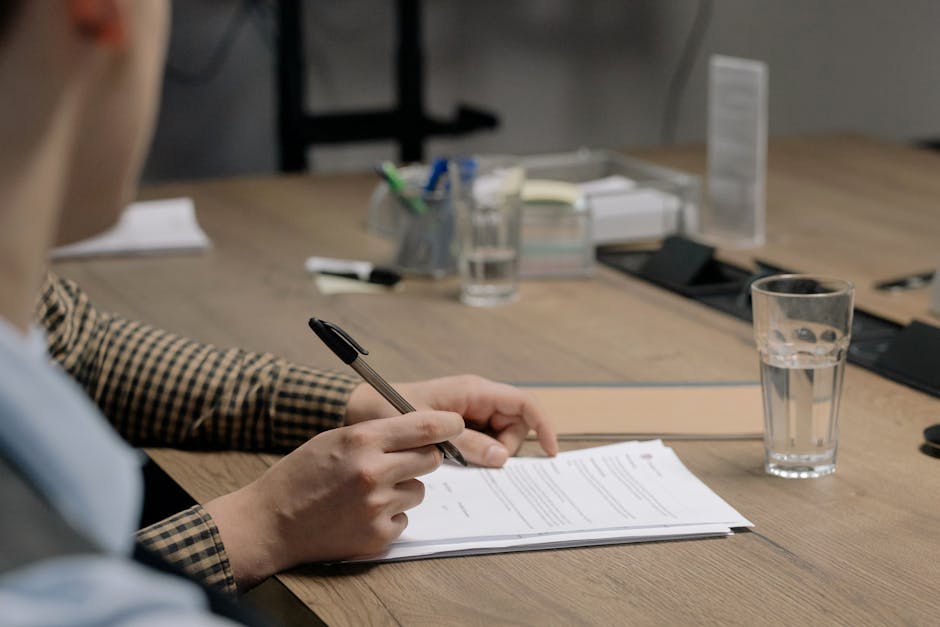
How to write up a business proposal in seven parts
Once the outcome is clear, give it a spine. The proposals that win tend to run five to fifteen pages, and the good ones move through the same seven parts in the same order:
- Title page. Client name, your name, the date. Clean and specific, not a stock cover.
- Executive summary. Two or three paragraphs that compress the whole thing. Write this last.
- The problem. Their situation in their words, backed by any numbers you have.
- Your solution. The approach, the deliverables, and what actually changes for them.
- Timeline. Milestones and dates so they can picture the work happening.
- Pricing. Clear costs, payment terms, and any optional add-ons.
- Terms and a place to sign. Make saying yes a two-second job.
That order is the backbone of how to write up a business proposal that reads clean and closes fast. Skip a part and the reader stalls, hunting for the timeline that never showed up. Shuffle the sequence and you bury your best point under housekeeping. Keep it as is and the client follows you from “here is your problem” to “here is where you sign” without ever losing the thread.
Nail the executive summary
If a busy client reads only one section, it is this one. Often it is the only part the decision maker sees before forwarding your document to someone else on the team. So treat it like the entire proposal, shrunk down.
Write it last, once you actually know what you are promising. Two or three tight paragraphs: the problem, your solution, the headline result, and roughly what it costs. No throat clearing. No “thank you for this exciting opportunity.” Give a busy person what they need in fifteen seconds. Nail the summary and the rest of the document just earns the trust the summary already started building.
Write their problem back to them
The part of how to write up a business proposal that actually wins deals is the problem statement, and it is the one almost everyone rushes. Before you pitch a single deliverable, prove you understood the brief. Say the client’s problem back to them in plain language, with the specifics they gave you on the call and any data you can pile on top.
This is exactly why generic templates lose. Fully customized proposals hit win rates as high as 65%, while heavily templated ones sit down around 15% to 25%. The gap is not slick design. It is whether the client finishes that section thinking, “yes, that is exactly my situation.” Spend the extra hour here. It is the highest-return hour in the whole document.
Make the price easy to say yes to
Pricing is where a lot of people learning how to write up a business proposal quietly lose the deal. They tuck the number near the back, or they drop one scary lump sum with zero context and cross their fingers. Do the opposite. Put pricing in a simple table, break the work into line items, and offer two or three tiers so the client is picking a lane instead of deciding yes or no.
The data backs it up. Proposals with a clear pricing table convert roughly 54% better than a wall of text. And throw in a visual while you are at it, a mockup, a quick before-and-after, a small chart, because proposals with images close around 72% more often. People buy what they can picture. A number sitting inside a clean table feels smaller and safer than the same number buried in a paragraph.
The proof that closes the deal
Here is what nearly every guide on how to write up a business proposal skips. You can nail the problem, the solution, and the price, and still lose to a competitor the client simply trusts more. Trust is the tiebreaker. And you do not build it by describing how great you are. You build it with proof from other people.
The numbers are tough to argue with. Adding case studies and testimonials makes a proposal 73% more likely to turn into a won deal. So drop a short client quote right next to your solution. Put a two-line result from a similar project beside your pricing. Link out to a handful of recent reviews. Let other people vouch for you so you are not stuck overselling yourself on the page.
That is the real answer to how to write up a business proposal that closes: the outcome first, the client’s problem in their own words, a price they can see, and proof they already trust. The first three you can knock out in an afternoon. The proof is the part you have to collect over time, ideally by letting an automated review collection system do the asking for you.
The bottom line on how to write up a business proposal
If there is one thing to take away about how to write up a business proposal, it is that consistency wins. The businesses that get the most out of how to write up a business proposal are the ones that make it a steady habit rather than a one-off push, and let the results build on their own.
Reviews increasingly shape which businesses buyers and search engines trust. For context, see Google’s guidelines on reviews.
Where the proof actually comes from
All that proof has to come from somewhere. The testimonials, the star ratings, the “they delivered exactly what they promised” quotes that make a proposal impossible to turn down, those are reviews. And most businesses are sitting on far fewer than they have earned, simply because nobody asked at the right moment.
Knowing how to write up a business proposal only helps if you have the social proof to fill it. Every finished project is a chance to collect a fresh review, but chasing them by hand never actually happens once you get busy. So your strongest proof quietly stops growing right when you need it most.
That is the gap Trophy Jar closes. It plugs into the tools you already use and automatically sends a review request the moment a deal is won or a job wraps, then nudges the people who have not replied yet. Fresh, genuine reviews collect themselves, so your next proposal always has recent proof to lean on.
Frequently Asked Questions
How long should a business proposal be?
Most proposals that win run five to fifteen pages. Keep it as short as you can while still covering the seven core parts: title page, executive summary, the problem, your solution, timeline, pricing, and terms with a place to sign. Length is not the goal. Clarity is.
What is the most important part of a business proposal?
The problem statement and the proof. Customized proposals that say the client’s problem back to them win up to 65% of the time versus 15% to 25% for generic templates, and adding testimonials and case studies makes a proposal 73% more likely to close. Show you understood them, then let other clients vouch for you.
Should I put pricing in the proposal or wait?
Put it in, clearly. Proposals with a simple pricing table convert about 54% better than hiding the number in a paragraph. Break the work into line items and offer two or three tiers so the client is choosing an option rather than deciding yes or no.
Related reading
Keep going: see collect video testimonials.
Give every proposal proof it can’t ignore
Trophy Jar collects fresh reviews automatically after every won deal and finished job, so your next business proposal always opens with recent, credible social proof to close on. Start for $9/month.