Figuring out how to write a business proposal for funding comes down to one thing. You have to convince someone with money that backing you is smart and low-risk. Not a gamble. A good bet. The document is just the vehicle. What you are really doing is answering the quiet question every lender and investor carries into the room: can I trust this person with my capital? Nail that, and the formatting mostly sorts itself out.


Lead With the Outcome, Not the Ask
Here is the mistake almost everyone makes. They open with the story. The founding moment. The passion. The long road that got them here. It feels important to you. To the person reading forty of these a month, it is noise.
Start with what the reader gets instead. The gap in the market you fill, the revenue behind it, the return on their money. Understand how to write a business proposal for funding and you understand that page one is not about you at all. It is about the outcome you are handing them.
Treat it like pitching a busy person, because you are. They decide in the first ninety seconds whether to keep reading. So put the opportunity up front, keep it concrete, and save the origin story for later. If it survives at all. A number a reader can picture will beat an adjective every single time.

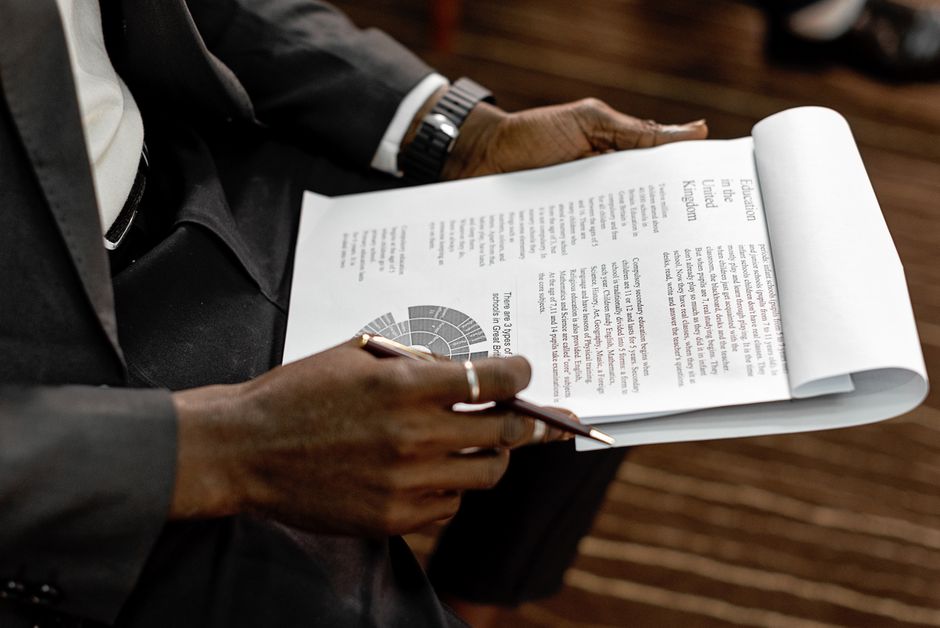
How to Write a Business Proposal for Funding, Section by Section
Investors and lenders expect a familiar shape. Wander off it and you do not look like a maverick. You look hard to evaluate. Most people who know how to write a business proposal for funding will point you to roughly the same set of sections:
- Executive summary. A one-page snapshot: what you do, the need in the market, your topline numbers, and exactly how much you want.
- Company overview. Your mission, a little history, and, this part matters, your team and why they can actually pull this off.
- Market analysis. Who buys from you, how big the opportunity really is, and where you stand against the competition.
- Products or services. What you sell and the specific problem it kills.
- Marketing and sales strategy. How you reach buyers and turn them into revenue.
- Financial projections. Income statement, cash flow, and balance sheet, run out a few years.
- The funding request. The amount, plus a line-by-line breakdown of where every dollar goes.
None of this needs reinventing. Learning how to write a business proposal for funding is mostly about filling this skeleton with honest, specific, believable detail. The structure is free. The credibility is what you have to earn.
The Executive Summary Carries the Most Weight
If a reader gets through exactly one page, it is this one. So treat the executive summary as the entire proposal in miniature. What the business does. The need it meets. Your topline projections, meaning sales, margins, and net income for the first few years. The amount you are raising. A short line on where it lands.
Write it last. You cannot summarize an argument you have not built. Honestly, a lot of the frustration people feel around how to write a business proposal for funding just evaporates the moment they stop drafting the summary first and let the rest of the document tell them what to say.
Keep it tight. Run past a page and you are burying the signal in noise. Cut until only the strongest facts are left, then cut one more time.
Financial Projections People Will Actually Believe
This is where proposals live or die. Anyone can draw a hockey stick. The credible ones show their work. Ground every number in a stated assumption: your pricing, your conversion rate, your cost to land a customer, your churn. The moment a reviewer can trace a projection back to a reason, the whole document earns trust.
Include the three statements they will go looking for: profit and loss, cash flow, and a balance sheet, run a few years out. Then defend the ask. Tie each dollar to an outcome. “$40,000 for two hires who bring in $200,000 of new revenue” lands far harder than a vague marketing line item.
A big part of how to write a business proposal for funding well is resisting the urge to inflate. Conservative numbers you can defend beat ambitious ones you cannot, every time. Reviewers have seen the fantasy version a hundred times over, and they discount it on sight.
The Part Most Founders Skip: Proof You Can Deliver
Every section above argues that your plan is sound. Not one of them proves that you, specifically, can execute it. That gap is exactly where good proposals get killed.
So bring evidence. Traction. A signed pilot. Named customers. And when you have them, testimonials and reviews from real people you have already served. One line like “rated 4.9 stars across 200 verified reviews” does something no spreadsheet can. It shows a stranger that someone already trusted you and walked away glad they did.
That is the quiet secret behind how to write a business proposal for funding that actually closes. The document makes the logical case. The proof makes the emotional one. Do both and you stop asking for a favor. You start offering a de-risked opportunity. If you want to go deeper, pair this with a simple system for gathering customer proof long before you hit send.
The bottom line on how to write a business proposal for funding
If there is one thing to take away about how to write a business proposal for funding, it is that consistency wins. The businesses that get the most out of how to write a business proposal for funding are the ones that make it a steady habit rather than a one-off push, and let the results build on their own.
Reviews increasingly shape which businesses buyers and search engines trust. For context, see Google’s guidelines on reviews.
Why Reviews Are the Trust You Cannot Fake in a Proposal
Numbers persuade the head. Social proof works on the gut. When a lender or investor sees that hundreds of real customers rated you highly, the risk they are weighing quietly shrinks. And that same trust keeps closing deals long after the round is done, with every new client who looks you up before they sign.
Here is the problem. Most great work never becomes a review. The customer is happy, the job is finished, and nobody thinks to ask. So the proof you could be putting in front of an investor just does not exist yet.
That is the gap Trophy Jar fills. It plugs into the tools you already use and sends a review request automatically the moment a trigger fires, a job wrapped up, an invoice paid, then nudges the people who did not respond. What you get is a steady stream of genuine, verified reviews building quietly in the background, ready the day you need to prove someone can trust you.
Frequently Asked Questions
How long should a business proposal for funding be?
Long enough to make the case, short enough to get read. Most funding proposals run 10 to 20 pages, but the executive summary should fit on a single page. Reviewers skim first and only read deeply if that first page earns it, so lead with your strongest facts and cut anything that does not move the decision forward.
What financial statements do investors want to see?
Three: a profit and loss statement, a cash flow statement, and a balance sheet, projected out a few years. Ground each projection in a stated assumption like pricing, conversion rate, or churn. Numbers a reviewer can trace back to a reason build far more trust than an aggressive forecast with nothing behind it. Cash flow, in particular, is often the first thing an investor checks.
How do I make my funding proposal stand out?
Prove you can execute, not just plan. Traction figures, a signed pilot, named customers, and real reviews from people you have already served all show a stranger that others trusted you first. That evidence does something a projection cannot, which is turn your ask from a gamble into a de-risked opportunity.
Related reading
Keep going: see collect video testimonials.
Build the proof your funding proposal needs
Investors back businesses other people already back. Let Trophy Jar collect verified reviews automatically, so the social proof is sitting there ready before you send your next proposal. Start for $9/month.